
flame Teams
A human performance experience with measurable impact
Burn bright,
not out
Most organisations invest heavily in strategy, systems, and technology, yet performance ultimately comes down to something far more human: how people think, how they respond under pressure, and how well they work together.
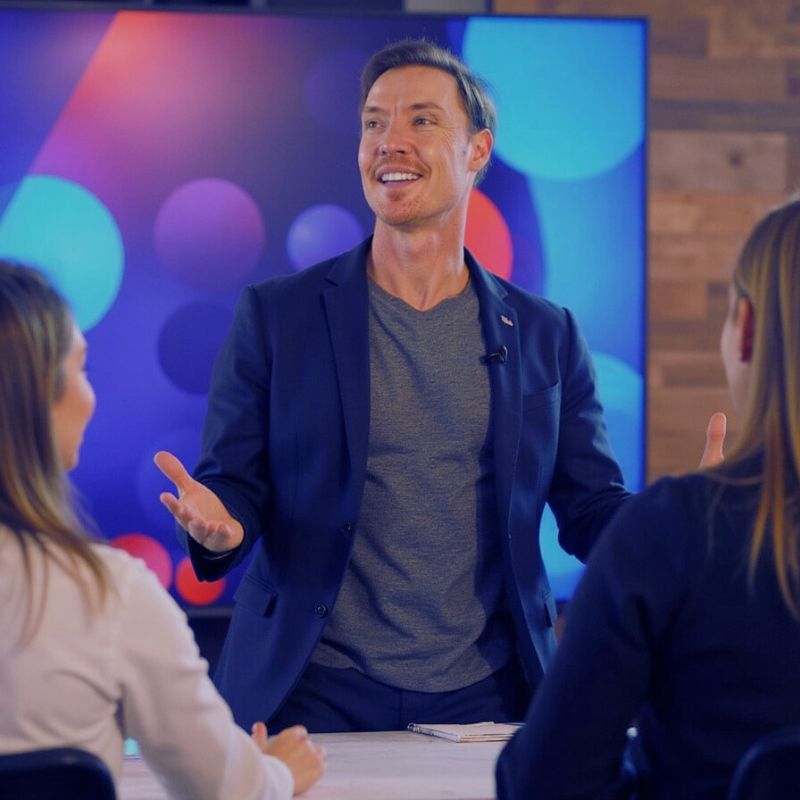
FLAME Teams is a live experience designed to strengthen those foundations.
It brings people back to clarity, energy, and connection—not as abstract ideas, but as capabilities that can be developed, measured, and sustained over time.





Why Flame Teams?
Modern work places people under constant cognitive and emotional load. Attention is fragmented, pressure is persistent, and even high performers can find themselves operating below their potential.
In this environment, asking people to push harder is rarely the answer. Performance improves when people are aligned—when they have the clarity to focus, the energy to sustain effort, and the connection to work effectively as a team.
FLAME Teams is designed to create that alignment. It helps individuals regulate their state, sharpen their thinking, and reconnect with what matters, so that performance becomes more consistent and less dependent on short bursts of effort.
Measured, not assumed
One of the challenges with many live experiences is that impact is felt, but not always measured.
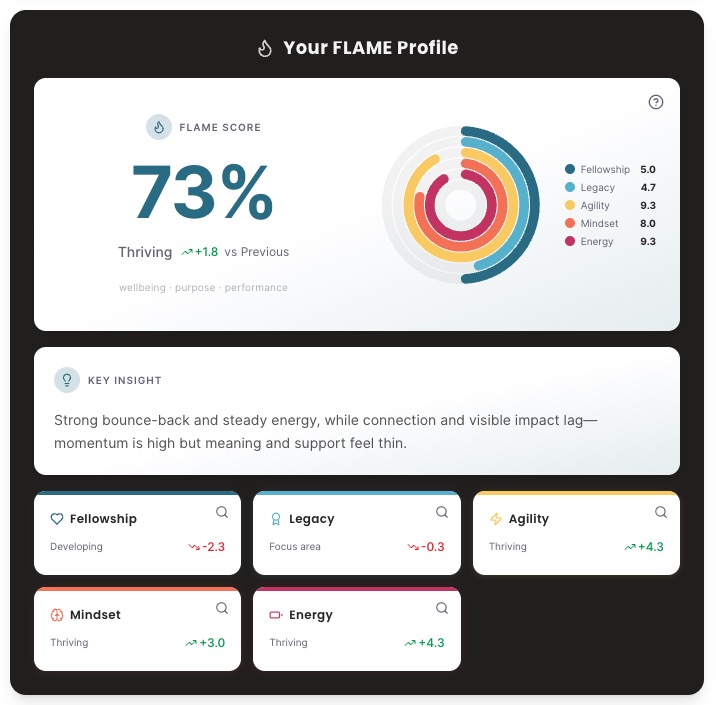
FLAME Teams addresses this directly through the FLAME Assessment, which provides a clear baseline before the experience and a way to track change over time.
The assessment offers insight into key drivers of performance, including energy and recovery, stress response, mental clarity, team connection, and alignment with purpose. This allows organisations to see where their people are starting from, where improvements occur, and where further development may be needed.
The result is a more informed approach to human performance—one that moves beyond intuition and into something visible, trackable, and reportable.

What Changes?
Following the experience, individuals tend to think more clearly and make better decisions, particularly under pressure. They develop practical ways to regulate stress and maintain composure, which supports both performance and wellbeing.
Teams often experience a noticeable shift in how they communicate and collaborate. Trust becomes easier, conversations become more constructive, and alignment improves.
Perhaps most importantly, people leave with a more sustainable relationship to energy. Rather than operating in cycles of push and recovery, they begin to manage their capacity more deliberately, which supports consistent performance over time.